Supraventricular tachycardia (SVT) is a type of abnormal heart rhythm diagnosed using an ECG. Unlike many other cardiac conditions, episodes of abnormal rhythm may occasionally not be present while testing, which makes it critical to understand how and when to capture a relevant strip for proper identification of the problem.
This article provides information about the nature of supraventricular tachycardia, the appearance of an SVT tachycardia ECG, its underlying causes, and the methods of the treatment that may be available in particular situations.
What Is Supraventricular Tachycardia?
SVT is a type of dysrhythmia or abnormal heart rhythm, which impacts the upper chambers of the heart. It is classified as tachycardia, which means that the affected person’s heart rate is higher than normal, typically over 100 beats per minute, and often reaches 150-200 beats per minute.
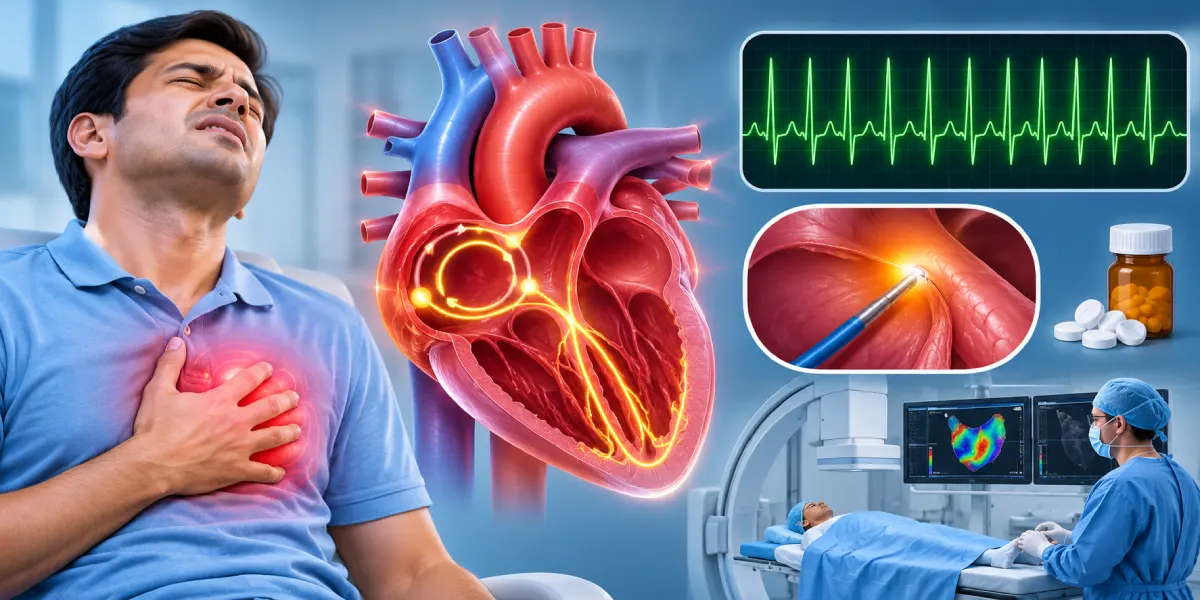
The mechanism behind SVT generally falls into two categories. In some people, an extra electrical pathway exists in the heart from birth, an additional electrical pathway can allow signals to circulate through the heart in an abnormal loop. In others, a small area of tissue in the atria begins firing rapid, abnormal impulses on its own, overriding the heart’s normal pacemaker.
Episodes can be triggered by a range of factors like stress, caffeine, alcohol, a full stomach, or even certain body positions, which have all been associated with onset. Some people experience SVT rarely, with episodes lasting seconds to a minute; others have frequent or persistent episodes significant enough to require immediate treatment.
Symptoms Associated With SVT
The symptoms of SVT range from mild to severe depending on the speed of increase in heart rate and duration. One such sign is palpitations, defined as a conscious perception of one’s own heartbeat and are common symptoms.
Palpitations, a conscious perception of a rapid or pounding heartbeat, are one of the most common symptoms. Light-headedness and shortness of breath may accompany more rapid episodes.
Chest discomfort is reported in some cases and fainting can occur as well. This is less common and generally associated with more prolonged or rapid episodes.
The severity of symptoms does not always reflect the seriousness of the underlying rhythm disturbance, which is why accurate determination of supraventricular tachycardia ECG is often more relevant than the symptoms for the treatment of this condition.
How SVT Is Diagnosed: The Importance of ECG for Diagnosis
An electrocardiogram or ECG, which records the electrical activity of the heart, is the diagnostic test for SVT.
A routine ECG during an episode of SVT typically shows a rapid, regular heartbeat with narrow QRS complexes. The QRS complex represents ventricular depolarisation. A narrow QRS complex is common in many forms of SVT. The abnormal rhythm originates above them.
One of the more clinically important features of SVT is that the ECG often looks entirely normal between episodes. This is why it is important to capture the tracing at the time of the event for an accurate diagnosis. An ECG recorded between episodes may be normal, although some patients have findings that suggest an underlying electrical pathway or other rhythm disorder.
It may be necessary to conduct longer-term monitoring if the event is too infrequent or too short to be captured on a standard ECG. A Holter monitor can be worn for up to 48 hours or more while the patient goes about their daily business, increasing the likelihood of an episode being picked up on the tracing.
An event monitor, or in some cases, a smartwatch, may also be worn to record an ECG at the time of an episode, if one occurs.
Interpreting the SVT Tachycardia ECG: What To Look For
While an ECG can confirm that a patient is experiencing tachycardia, there are other signs that can be seen on the tracing that can help to determine what type of arrhythmia it is.
The P waves, which indicate electrical activity from the atria, are often masked or immediately follow the QRS complex. This happens because the abnormal circuit causes both the atria and ventricles to contract at the same time. This is common with the most common type of SVT, atrioventricular nodal reentry tachycardia.
Other irregularities may be seen on the tracing if the additional pathway is located somewhere other than the atrioventricular node. If this is the case, there may also be a shorter interval preceding the QRS complex and an abnormal rise at the beginning of the complex, also known as a delta wave. These are both signs of atrioventricular reentry tachycardia and are important to distinguish from the former, as the treatments for these two types of SVT are different.
Treatment for SVT
SVT treatment depends on the following factors:
type of arrhythmia
the frequency of episodes
symptom severity
overall health
Vagal maneuvers are a common course of therapy for intermittent episodes of SVT that do not come with major symptoms. They can interrupt the arrhythmia on a large scale by stimulating the vagus nerve.
Patients are advised to adopt lifestyle changes, such as:
limiting alcohol consumption
managing stress
maintaining a balanced diet
All of these can help in reducing the risk of future episodes.
Pharmacologic intervention is advised for patients having frequent episodes that cannot be managed by vagal stimulation or those that occur in association with severe clinical manifestations.
Antiarrhythmic drugs can also ease the condition by altering the heart’s electrical conduction. They prevent or shorten arrhythmia episodes.
When an episode doesn’t fade on its own electrical cardioversion, a controlled shock that resets the heart rhythm can be used.
Catheter Ablation as the Preferred Treatment for Recurrent SVT
Who Manages SVT Diagnosis and Treatment
SVT is treated by a cardiac electrophysiologist with specialized training in the heart’s electrical system and rhythm disorders.
In the UAE, Dr. Moutaz El Kadri is a renowned specialist who diagnoses and treats SVT. He abides by ECG-based diagnosis, extended monitoring, and appropriate treatment ranging from lifestyle advice to catheter ablations, depending on the individual case.
An electrophysiologist’s assessment usually starts with a review of any ECG recordings taken during the episodes of SVT. Afterwards, they review the frequency and severity of symptoms and determine whether further testing is needed.
When to Seek Medical Attention
Some symptoms require quick medical attention. It includes fainting during an episode, persistent chest pain or a prolonged episode that does not resolve may require urgent medical attention.
For less severe but recurring symptoms, keeping a record of when episodes occur, how long they last and any associated symptoms can meaningfully help a specialist reach an accurate diagnosis. A symptom diary can help the specialist identify patterns, particularly when the resting ECG is normal between episodes.
Conclusion
Don’t ignore a racing heart. Schedule an appointment with Dr Moutaz El Kadri at The Heartae today.
Schedule an appointmentFrequently Asked Questions
What does the ECG show in the case of a supraventricular tachycardia?
In the case of an episode, the ECG usually shows a regular, rapid heart rhythm. The ECG may show a rapid, regular rhythm with narrow QRS complexes. P waves may be difficult to identify or may appear shortly after the QRS complexes, depending on the SVT type. These characteristics help to identify the type of arrhythmia.
Why does the ECG show normal between episodes of SVT?
An ECG may be normal between episodes because the abnormal rhythm is intermittent. Some patients may still show signs of an underlying electrical pathway. This is why it is so important to record an ECG during an episode or to use continuous ECG monitoring.
Who treats SVT in Abu Dhabi treats?
There are many experienced cardiologists treating patients here. Dr. Moutaz El Kadri is one of the experienced cardiologists in Abu Dhabi. He determines the appropriate course of treatment, which may include catheter ablation and the management of the patient’s condition through regular ECG monitoring.
What is the most effective treatment for recurrent SVT?
In many cases, the preferred treatment for recurrent SVT is catheter ablation. A cardiac electrophysiologist will determine the most appropriate course of therapy for each individual case of SVT.
Is it possible to outgrow SVT?
It is sometimes possible to have only one or a few episodes of SVT. In such cases, especially if an attack is provoked by certain activities, no treatment may be necessary. However, if episodes of SVT are frequent, treatment is necessary to prevent recurrence.