PVC Ablation Procedure in UAE: Benefits And Risks
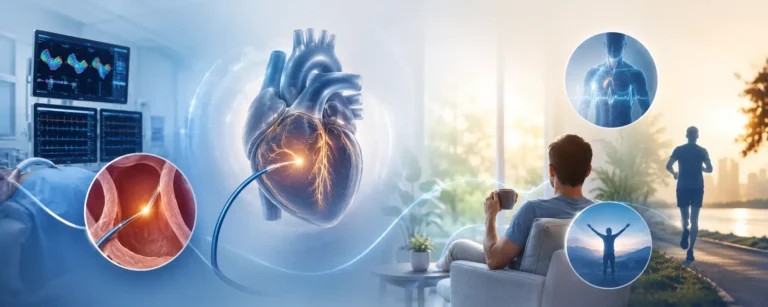
Arrhythmias can make your daily life very unpredictable and difficult. One moment you are feeling fine, and then suddenly your heart starts racing or skipping beats. This can impact your health, energy, and daily life. Premature Ventricular Contractions or PVCs are a type of irregular heartbeat where an extra beat starts from the lower chambers of your heart, instead of following the heart’s normal rhythm. PVCs are quite common and, in most cases, not harmful. Your risk of complications and need for treatment increases if you have another heart condition, such as heart disease or a congenital heart defect. PVC ablation procedure in UAE is a safe and effective treatment option. If you are considering heart ablation for PVC, you need to know both the merits and risks of the PVC ablation procedure. By the time you finish reading this blog, you will have clarity about the benefits and probable complications of this procedure. You can discuss these freely with your doctor and make an informed decision.
Understanding PVC Ablation Procedure in UAE
Benefits of PVC Ablation Procedure
-
High Success Rates
PVC ablation procedure in UAE has a very high success rate, especially when the abnormal focus is clearly identified. It is considered a successful treatment option as the patients get long-term relief from the symptoms of PVCs. -
Significant Symptom Relief
Patients get significant relief from palpitations, fatigue, dizziness, and breathlessness. When the source of the abnormal rhythm is eliminated, the heart returns to a more stable electrical pattern and begins beating regularly. -
Prevention of Cardiomyopathy
Frequent PVCs can weaken the heart muscle over time. PVC ablation procedure helps to restore normal heart function and prevents PVC-induced cardiomyopathy. The heart function also improves a great deal after successful ablation. -
Reduced Dependence on Medication
Anti-arrhythmic drugs control symptoms, but they come with their own side effects and long-term risks. PVC ablation eliminates or reduces the need for lifelong medication. It provides a long-term solution and avoids drug-related complications. -
Minimally Invasive with Quick Recovery
PVC ablation is performed via catheter insertion, so it is not a major surgery. This leads to shorter hospital stays and faster recovery. Most patients can start their normal activities relatively quickly.
Risks of Heart Ablation for PVC
-
Vascular Complications
Since the procedure involves inserting a catheter into blood vessels, it may cause bleeding or bruising at the insertion site. There is a possibility of blood vessel injury in some cases. -
Cardiac Complications
Rare but more serious risks in heart ablation for PVC can be damage to heart valves and heart perforation. In very rare cases, fluid can build up around the heart. -
Recurrence of Arrhythmia
While success rates are high, PVCs can return in some cases. It usually depends on the origin of PVC. In such situations, repeat ablation may be required. -
Risk of Blood Clots or Stroke
Though rare, catheter-based procedures can lead to blood clot formation and sometimes stroke. To mitigate this risk, preventive measures such as anticoagulation are used. -
Not Always Effective for All Patients
Success depends on multiple factors, such as the location of the PVC origin and the presence of any structural heart disease. The frequency of PVCs is also an important factor.
Overall, the PVC ablation procedure in UAE is considered a safe and well-established procedure when performed by experienced doctors in modern facilities. The complication rates are less than 1%, and major complications are rare. Most side effects are temporary and can be managed easily.
Book your consultation today for PVC Ablation Procedure and take the first step toward a healthier heart rhythm.
Conclusion
Heart ablation for PVC is a very effective and minimally invasive solution for managing frequent or symptomatic PVCs. With a high success rate, exceeding sometimes 95%, and comparatively fewer complications and risks, you can consider it after consulting your doctor. However, as with any medical procedure, you need to consider the risk factors, the severity of your symptoms, and your overall heart health before making a decision. If you are experiencing persistent palpitations or symptoms that affect your daily life, you should consult an experienced cardiac electrophysiologist, such as Dr. Moutaz El Kadri. Early diagnosis and timely treatment can help you save your heart from irregular beats, and you can enjoy a good quality of life!