

Heart rhythm disorders are generally life threatening as it can increase the risk of sudden cardiac arrest. For patients with certain heart conditions, ICD implant surgery can be a life-saving solution. An Implantable Cardioverter Defibrillator (ICDs) continuously monitors the heart and delivers an electric shock when dangerous rhythms occur. In the current scenario, ICDs have helped thousands of patients to live longer by preventing sudden cardiac death.
If you or your loved one has been diagnosed with heart disease or abnormal heart rhythms, then you need to visit The Heart.ae for more information and for accurate surgery details and centres. Here’s what you need to know about ICD implant surgery is, its benefits, procedure, risks, and when it may be recommended.
What Is ICD Implant Surgery?
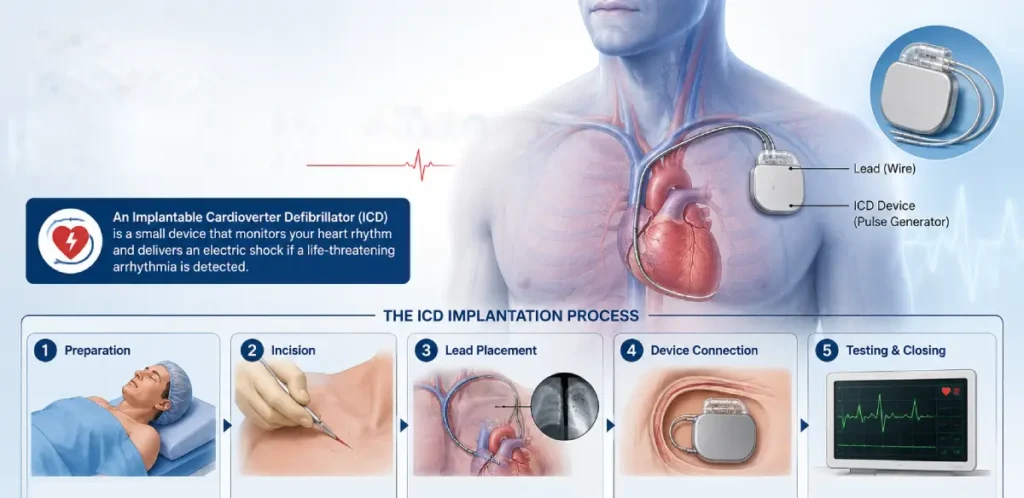
ICD implant surgery is a minimally invasive procedure to place an electronic device called Implantable Cardioverter Defibrillator under the skin, generally below the collarbone. This device is connected to the heart through thin wires that continuously monitors a patient’s heartbeat 24/7. An ICD is specifically designed to prevent sudden cardiac arrest usually caused by life-threatening arrhythmias.
Who Needs ICD Implant Surgery?
An Implantable Cardioverter Defibrillator (ICD) is recommended for people who are at high risk of sudden cardiac arrest due to serious heart rhythm disorders. It continuously monitors the heart and delivers a life-saving shock if a dangerous rhythm is detected. At The Heart.ae, experienced cardiologists evaluate each patient carefully to determine whether an ICD is the right treatment option. Your cardiologist may recommend an ICD in the following situations:
-
Previous Cardiac Arrest
If you have previously survived a sudden cardiac arrest, then you might have a higher chance of having another life threatening heart rhythm. In these types of cases, an ICD protects you by continuously monitoring your heartbeat and saving immediately if any dangerous heart rhythm occurs.
-
Ventricular Tachycardia (VT) or Ventricular Fibrillation (VF)
Ventricular Tachycardia (VT) occurs when a very fast heartbeat starts in the lower chambers of the heart. While, the Ventricular Fibrillation (VF) occurs when an irregular and chaotic heartbeat starts preventing pumping the blood effectively to the heart. These both conditions are life threatening. An ICD quickly detects these heart conditions and gives treatment before it leads to sudden cardiac arrest.
-
Heart Failure with Reduced Heart Function
Heart failure occurs when the heart is not able to pump blood as effectively it should. If your heart can’t pump blood effectively, (also known as ejection fraction) you have a higher chance of having dangerous heart rhythms. In such cases, an ICD is recommended to lower the risk of dangerous heart rhythms and increase survival.
-
Heart Damage After a Heart Attack
A severe heart attack usually leaves scars on the heart muscle. These scars can disrupt the heart's electrical signals and increase the risk of abnormal heart rhythms. If your heart has been weak after a heart attack, an ICD will help manage the life threatening risk in future.
-
Cardiomyopathy
Cardiomyopathy is a situation where heart muscle becomes weak, enlarged, or stiff. In this disease, the heart creates problems to pump blood properly and can increase the risk of dangerous rhythm disorders. Your cardiologist may suggest an ICD to protect against sudden cardiac arrest.
-
Inherited Heart Rhythm Disorders
Some patients have genetic heart conditions. In such conditions, the heart’s electrical system is affected. These heart conditions can increase the sudden risk of cardiac arrest, even in young and healthy individuals. Such genetic conditions include: • Long QT Syndrome • Brugada Syndrome • Other inherited rhythm disorders identified through genetic testing. An ICD surgery helps in identifying and providing long-term protection against these life threatening heart problems.
Signs You May Need ICD Implant Surgery
People should never let go easily of the medical symptoms. Some patients may not generate any warning signs, while others experience some symptoms indicating heart diseases. Recognising the early symptoms will help prevent the life threatening complications. If you experience any of the following symptoms, it is important to seek medical evaluation. At The Heart.ae, experienced cardiologists provide heart assessments to determine whether ICM implant surgery is needed or not.
-
Frequent Fainting (Syncope)
If you are fainting repeatedly without any obvious cause, then it can be linked to abnormal heart rhythms. These symptoms should never be ignored. If a person should be rushed if it occurs suddenly or during physical activity.
-
Irregular or Rapid Heartbeats
If you often feel that your heart is racing, fluttering, skipping heart hearts, beating irregularly, it may be a serious sign of arrhythmia such as ventricular tachycardia (VT). Your doctor may suggest an ICD for people to reduce these heart rhythm disorders.
-
Unexplained Dizziness
Frequent or unexplained dizziness can occur when the heart is unable to pump enough blood. This happens due to an abnormal rhythm. Doctors suggest a proper cardiac assessment to identify the underlying cause for these situations.
-
Chest Discomfort
If a person has continuous chest pain, pressure, or tightness in their heart. It can be a sign of an underlying heart situation. However, chest discomfort does not indicate heart rhythm disorder but still requires medical operation to identify the problem if any.
-
Shortness of Breath
If a person is having difficulty in breathing during daily activities such as climbing stairs, or resting. It could be a major sign of heart failure or reduced heart function. These conditions usually increase the risk of dangerous heart rhythms and serious problems.
How Is Implantable Cardioverter Defibrillator Surgery Performed?
Implantable cardioverter defibrillator surgery is usually completed between one to two hours performed under local anesthesia with mild sedation. The ICD surgery includes the following process:
- The doctor makes a small incision under the collarbone.
- Then, one or more leads are inserted through a vein into the heart.
- The inserted leads are now connected to the ICD device.
- Now, the ICD is placed under the skin.
- The device is tested to ensure it functions correctly.
- The incisions are closed with sutures.
An ICD performed patient usually stays overnight in the hospital, and returns home in 24 hours.
Benefits of ICD Implant Surgery
The biggest advantage of Implantable Cardioverter Defibrillator surgery is to prevent a sudden cardiac arrest and respond to dangerous heart rhythms. Key benefits include:
- Prevention of sudden cardiac death
- Continuously monitors heart 24/7
- Increase chances of long term survival for high risk patients.
- Gives peace of mind and confidence to patients and their families
Risks of ICD Implant Surgery
The ICD surgery also carries certain risks as like any other medical procedure. However, any serious complications are uncommon when performed by experts. Possible risks include:
- Implant site infection
- Bleeding
- Bruising
- Allergic reactions to medications
- Lead displacement
- Any device malfunction
ICD Implant Surgery in UAE
Availability of advanced cardiac care has made ICD implant surgery in UAE highly accessible and successful among patients. Leading cardiac centres include modern electrophysiology services, advanced imaging, experienced cardiologists, and post-operative follow-up. The advanced cardiac care and centres usually diagnose early problems, offers personalised treatment, and timely check-ups can reduce the risk of life threatening heart disorders.


